
We came to Seoul to meet Web3 teams, catch up with potential partners, and see what was happening in the Korean blockchain scene.
At KBW 2026, stablecoins, tokenized assets, and AI agents were everywhere. But we were just as interested in what happens behind the scenes.
How do teams handle growing traffic? Which networks do their products need? And what happens when their main RPC connection goes down?
Korea Blockchain Week 2026 was a good place to explore these questions. Over several days, we met with teams, connected with new projects, and got a closer look at where the Korean Web3 market is heading.
Some of the most interesting conversations happened far beyond the main conference stage.
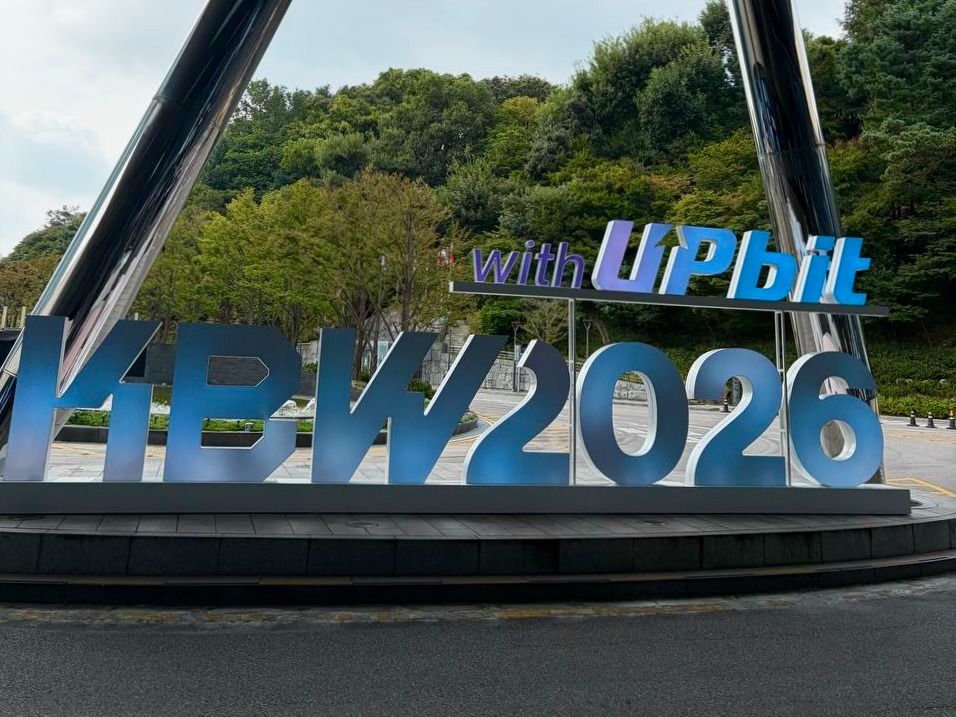
A Week of Meetings Across Seoul
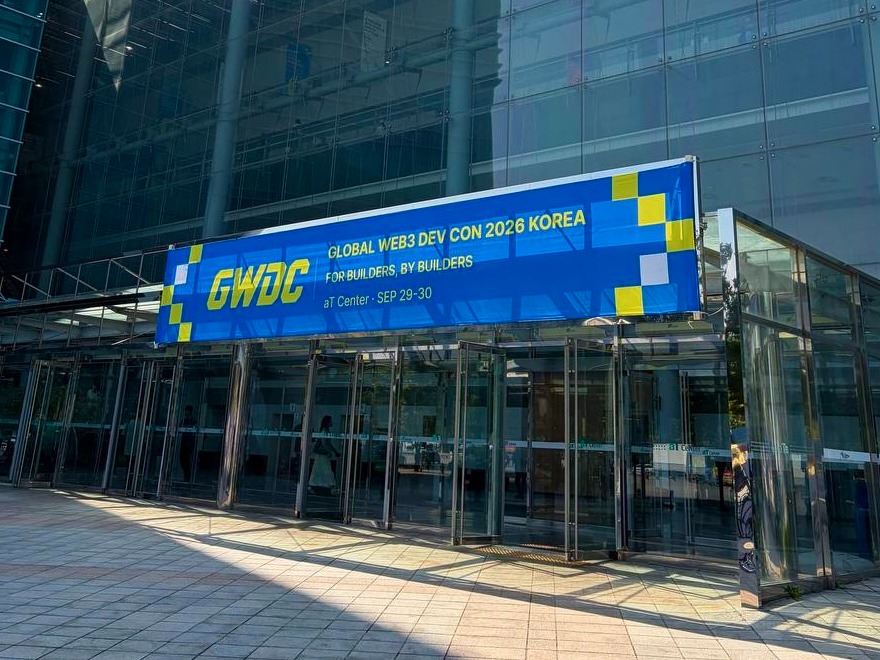
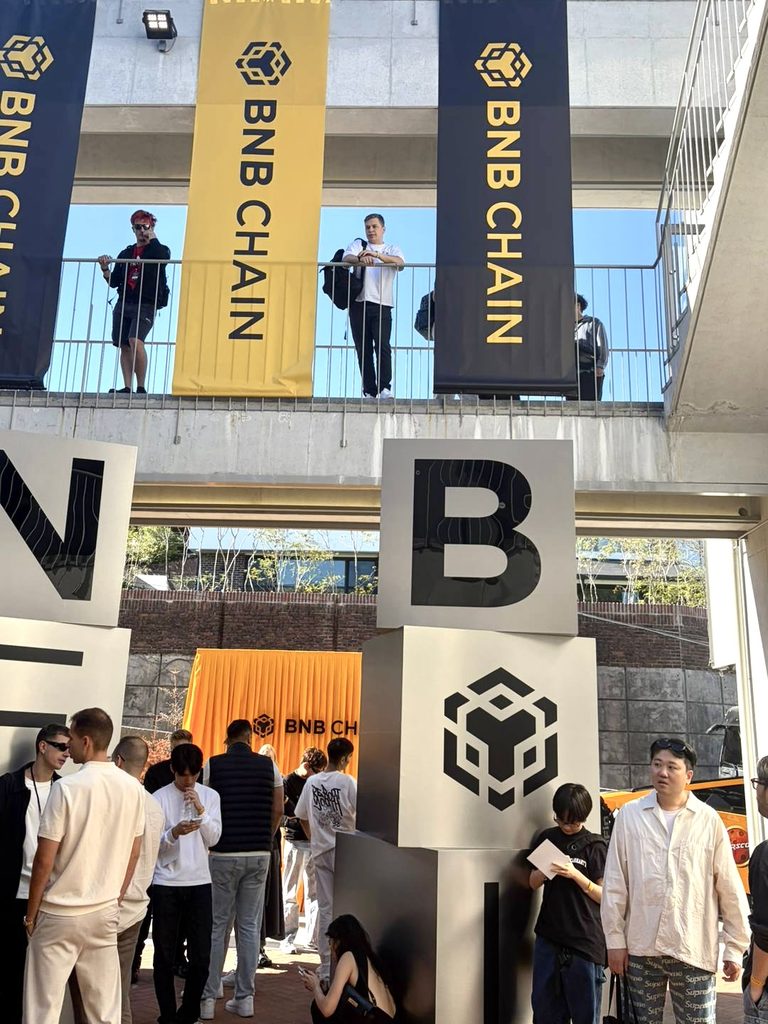
At KBW, the conference itself was just one part of the schedule. We spent the week moving between the main venue, side events, and smaller meetings around Seoul.
Some of the most useful conversations happened outside the official program. We also finally got to meet people we’d been talking to online for months.
For NOWNodes, the trip was mainly about partnerships. We wanted to catch up with teams we already knew, meet new people working on Web3 products, and find out what kind of infrastructure support they were looking for.
We came primarily to develop partnerships.
The audience included representatives from blockchain ecosystems, exchanges, wallets, infrastructure providers, and investment firms. What stood out was the strong presence of traditional financial institutions.
South Korea presents an interesting combination: an already active retail crypto market alongside growing institutional interest in blockchain technology.
This is also changing the nature of industry conversations. Discussions are increasingly moving beyond cryptocurrency trading toward payments, financial products, and blockchain technology integrated into everyday services.
What Happens After Someone Clicks “Pay”?
Stablecoins, real-world assets (RWA), institutional infrastructure, and AI agents were recurring themes throughout KBW.
But behind these topics was a practical challenge: How do you turn an interesting technology into a product people will actually use?
One demonstration that caught our attention came from GOAT Network.
The AI-powered shopping experience was remarkably straightforward. Users could log in through Kakao, choose a product, and complete their purchase using a bank card or cryptocurrency.
No complicated blockchain interactions. From the user’s perspective, it was simply an online purchase.
For us, as an infrastructure provider, products like this are particularly interesting.
Transactions must be processed correctly. Connections to blockchain networks need to remain stable. Latency must stay within acceptable limits, and the entire system needs to keep functioning as the number of users grows.
A product serving a handful of people during a demonstration faces very different infrastructure requirements once thousands of customers start using it simultaneously.
That is what makes AI agents and Web3 payments interesting beyond the user experience itself. They offer a glimpse into the infrastructure requirements that emerging applications may soon face.
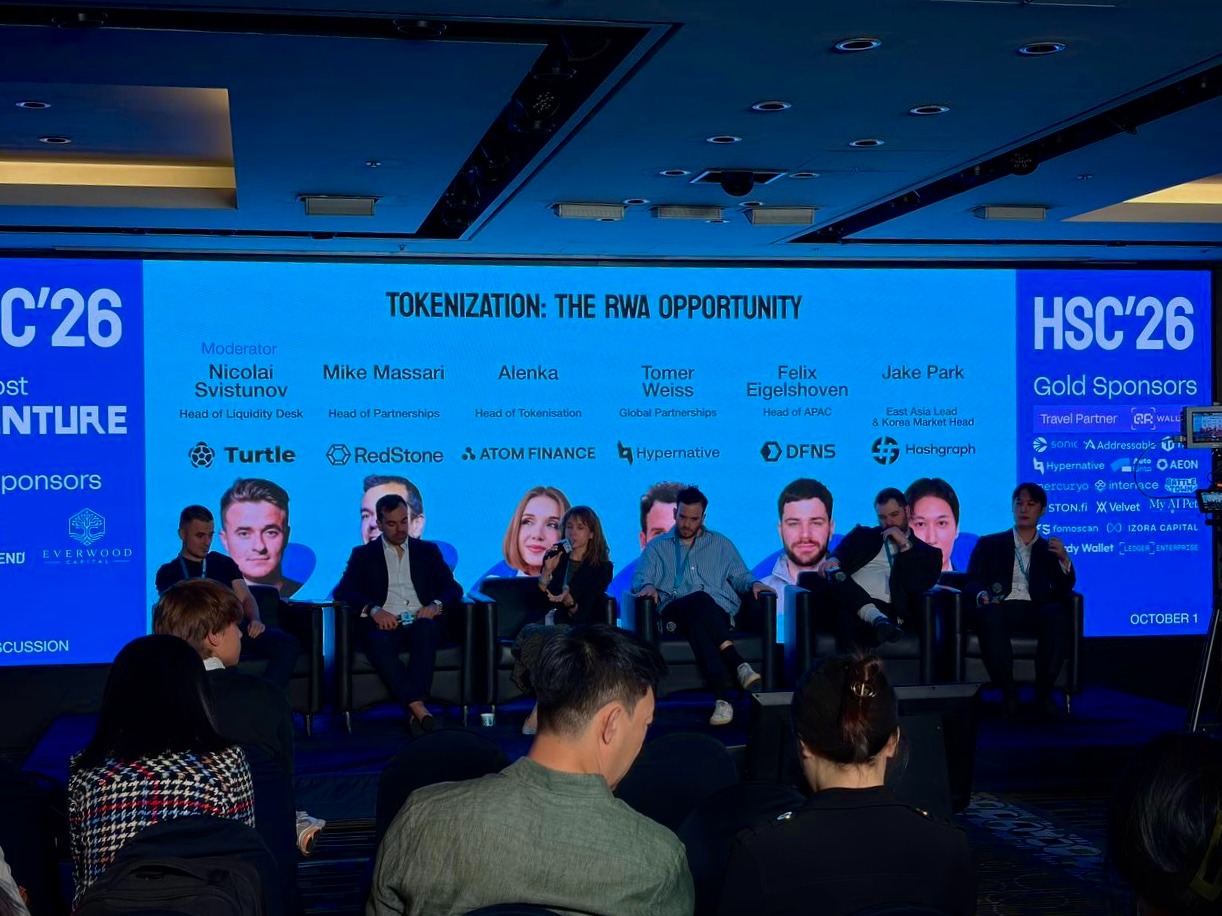
We also attended HSC26 Korea, where discussions focused on tokenization and RWA opportunities.
These applications bring infrastructure questions even closer to traditional financial requirements, particularly reliability, security, and interoperability with existing systems.
Behind Every Great User Experience Is Infrastructure That Works
While some participants focused on new blockchain use cases, our conversations with technical teams often returned to three familiar subjects: scaling, adding new networks, and reliable backup RPC access.
Different Web3 products have very different infrastructure requirements.
A wallet needs broad network coverage and predictable performance. A payment service depends on stable transaction processing and low latency. A rapidly growing application needs infrastructure capable of handling increasing demand without constant architectural changes.
And all of them eventually face the same question:
What happens when the primary RPC provider becomes unavailable?
Backup connections, load distribution, and responsive technical support can seem like secondary considerations during early development.
For a production application, however, they directly affect the user experience.
Our conversations at KBW reinforced the importance of discussing blockchain infrastructure in the context of each product’s architecture.
Telling a team how many networks NOWNodes supports is useful, but it is only the beginning.
A more productive conversation starts with understanding which networks the team already uses, where its current limitations are, what kind of traffic it expects, and how its fallback infrastructure should work.
That is where infrastructure discussions become genuinely valuable.
CoinMarketCap, MyWallet, and Dash: Why Meeting in Person Still Matters
One of the best reasons to attend major industry events is the opportunity to continue conversations that started long before the conference.
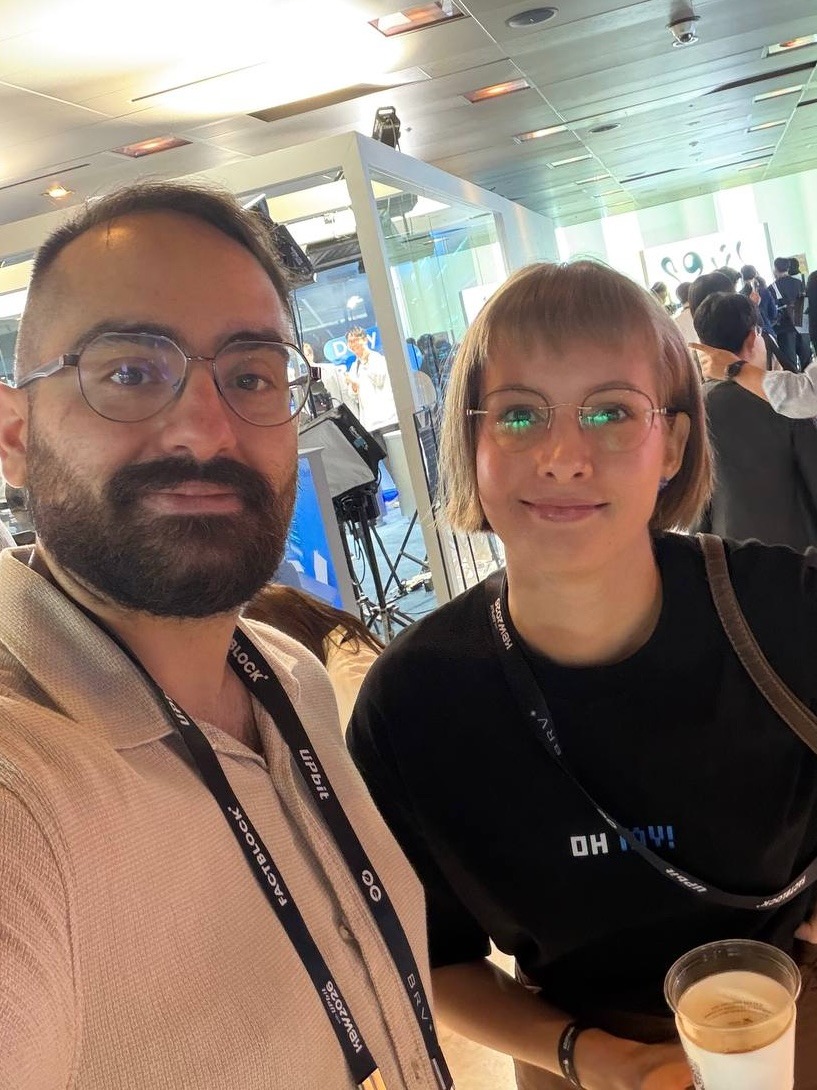
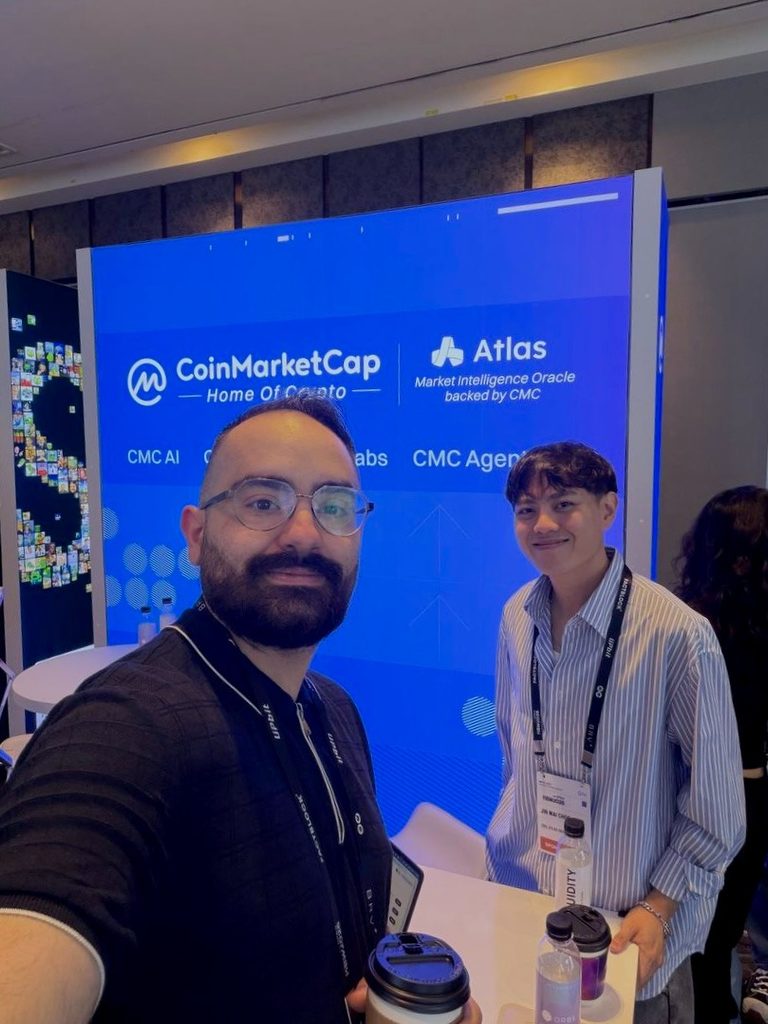
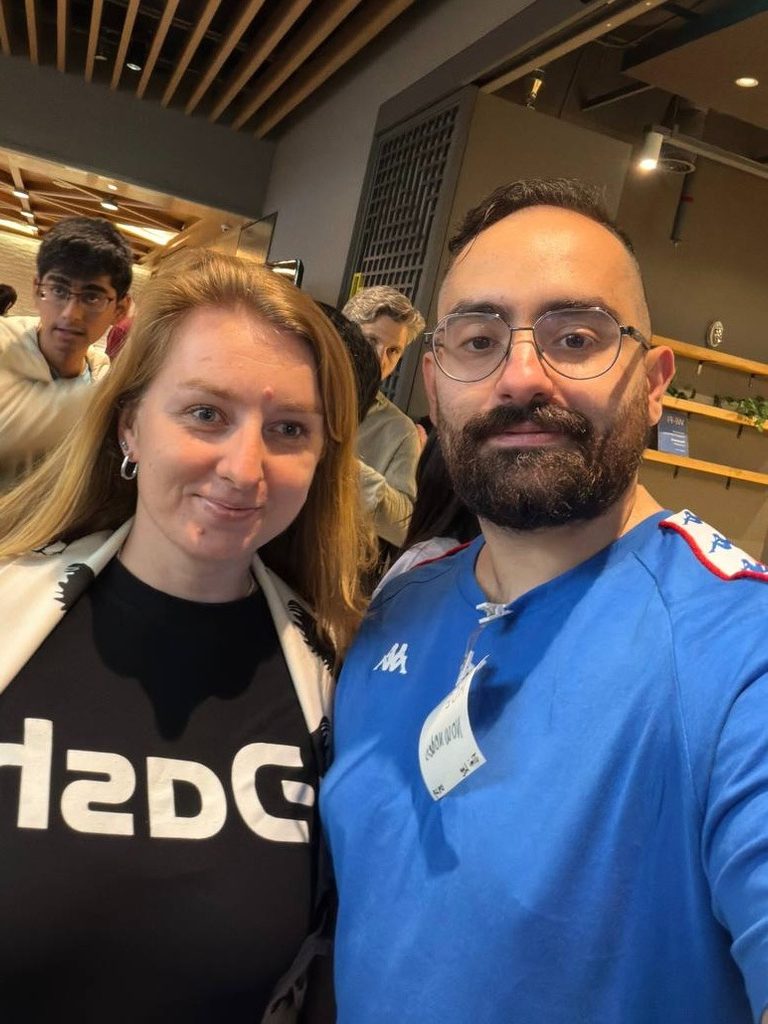
In Seoul, we met with the team from CoinMarketCap, Irene from MyWallet, and Daria, Head of Partnerships at Dash.
We had already been in contact with MyWallet and Dash, so KBW gave us the opportunity to continue those discussions face to face.
With CoinMarketCap, MyWallet, and Dash, we talked about where our products and technologies could fit together. Some conversations centered on infrastructure, others on ideas for working together beyond the conference.
It was particularly good to catch up with Irene from MyWallet and Daria from Dash in person. We had spoken before, but meeting in Seoul gave us a chance to go into more detail without squeezing everything into another online call.
We left KBW with several conversations worth picking up again. Now comes the part that matters: getting back in touch, digging into the technical details, and seeing which ideas are worth pursuing.
Korea Has Its Own Way of Building Web3
One thing became clear during our time in Seoul: knowing the technology is only half the job. You also need to know how people in Korea actually use it.
For NOWNodes, this changes the conversation. A Korean wallet team might care most about supporting specific networks and keeping transactions reliable. A payment application may have completely different priorities. Before talking about RPC endpoints or technical specifications, we need to understand what the team is building and where its infrastructure is struggling.
You need to understand which products are being built for the region, how their customers interact with digital services, and what technical challenges arise from their particular blockchain requirements.
The infrastructure priorities of a global DeFi protocol may be quite different from those of a local wallet or payment application.
Following KBW, we want to put even more emphasis on specific NOWNodes use cases, including backup RPC infrastructure, application scaling, and support for additional blockchain networks.
Rather than bringing the same proposal to every company, we want to start with the technical challenges each team is actually trying to solve.
How Do You Know Whether a Conference Was Worth It?
Industry conferences have one particular problem when it comes to measuring results: the number of meetings alone tells you very little about commercial success.
You can have dozens of conversations without securing a single integration.
Or you can meet a handful of relevant teams and begin a meaningful partnership several months later.
For that reason, we are not going to measure KBW’s success solely by the number of contacts collected.
What matters more is what happens over the next one or two months.
Which conversations turn into concrete proposals? How many teams begin testing NOWNodes infrastructure? Do those discussions lead to integrations, new customers, and revenue?
These are the outcomes we want to evaluate.
At the same time, the trip has already given us several useful insights.
We gained a better understanding of the infrastructure challenges facing wallets, payment services, and RWA projects. We continued existing partnership conversations in person and developed a clearer picture of how to communicate our product to teams that treat technical reliability as a business requirement.
For our next KBW, we would like to schedule more targeted meetings in advance and dedicate additional time to specialized events focused on payments, wallets, and infrastructure.
We are also considering a smaller event of our own for developers and partners, with a live product demonstration and a deeper technical discussion.
From Seoul to Singapore
After Korea Blockchain Week, our Asia trip continued at TOKEN2049 Singapore.
This time, NOWNodes had a different role.
We hosted our own workshop and provided blockchain infrastructure for participants in the hackathon.
It was a natural continuation of the conversations we had in Seoul.
At KBW, we discussed the infrastructure requirements of emerging Web3 applications. In Singapore, we had the opportunity to support teams directly as they built their projects.
When a wallet works reliably, an application handles growing traffic, and developers do not have to scramble for backup RPC access at the last minute, it means the right technical decisions were made.
Those are the problems we want to help teams solve, and the foundation on which we will continue building NOWNodes partnerships.
See you at the next conference.


