
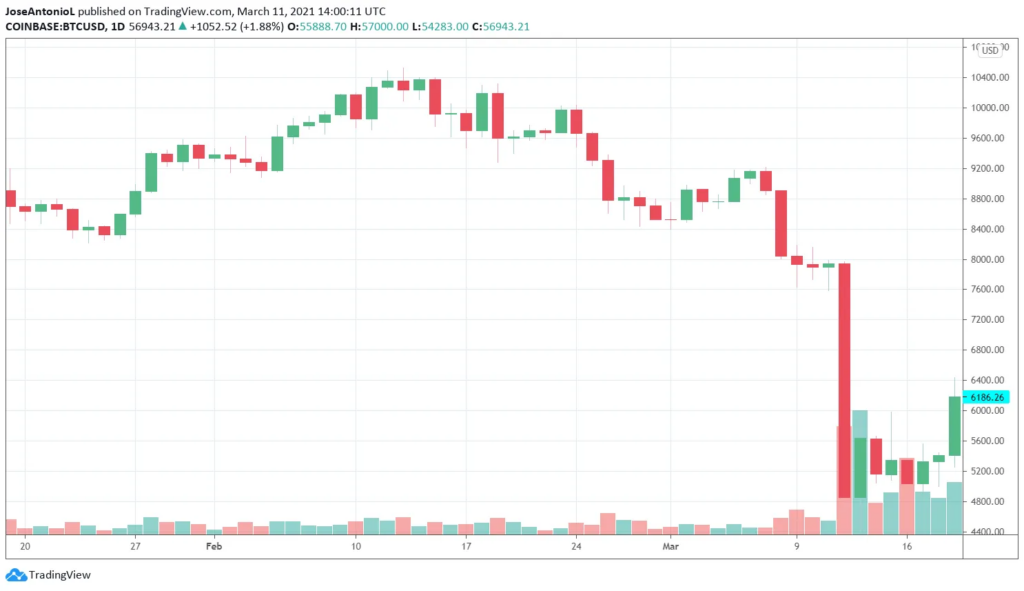
March 12, 2020 is remembered in the crypto industry as Black Thursday, the day when the price of Bitcoin collapsed by more than 40% within hours during the global market panic triggered by COVID-19. While traders were watching charts fall, something else was happening behind the scenes! The infrastructure of the crypto ecosystem was struggling to keep up with the sudden surge in activity.
Exchanges faced record trading volumes, wallets attempted to broadcast thousands of transactions simultaneously, and blockchain nodes were flooded with requests. Many services were not prepared for such demand. APIs slowed down, some exchanges temporarily stopped withdrawals, and wallets experienced transaction delays. For users it looked like frozen interfaces and long confirmation times, but for developers it revealed a deeper problem the infrastructure layer of crypto was still immature.
A Turning Point for the Industry
At that time many projects relied on small node clusters or self-hosted infrastructure without proper scaling. When millions of users tried to move funds at the same moment, these setups quickly became bottlenecks. RPC endpoints were overloaded, blockchain queries timed out, and services that depended on constant node connectivity struggled to function.
The events of March 2020 forced the industry to rethink how blockchain infrastructure should work. It became clear that crypto was no longer a niche experiment used by a small group of enthusiasts. Millions of users expected services to work instantly, even during extreme market volatility. Infrastructure needed to become more scalable, redundant, and professionally managed.
This shift created demand for specialized infrastructure providers that could maintain large node clusters, monitor networks around the clock, and handle sudden spikes in traffic. Instead of every company running its own fragile nodes, projects began looking for reliable gateways to blockchain data.
How NOWNodes Started
Around that time, NOWNodes was still a relatively small project. Originally it was built as internal infrastructure for products within the NOW ecosystem, including the ChangeNOW exchange. The goal was simple! Maintain stable access to blockchain networks so exchange operations could run smoothly.
Six Years of Growth
Over the past six years the blockchain industry has expanded dramatically. New networks appeared, DeFi emerged, and crypto wallets began serving tens of millions of users. With this growth came a much higher demand for reliable infrastructure.
Today NOWNodes provides access to 123 blockchain networks through a single gateway designed for performance and reliability. Developers can connect to ready-to-use RPC endpoints and immediately interact with blockchain data without maintaining their own nodes. What once required significant DevOps resources can now be integrated in minutes.
Built for Reliability and Scale
One of the main priorities for modern infrastructure is stability during periods of extreme activity — exactly the type of scenario the industry experienced during Black Thursday. To address this, NOWNodes infrastructure is built with multiple layers of redundancy, including distributed node clusters, automatic failover systems, and load balancing.
The platform also removes rate limits on requests per second, allowing partners to scale their applications without worrying about traffic spikes. Whether an application handles a few thousand users or millions, the infrastructure is designed to absorb sudden growth without disrupting service.
Trusted by the Crypto Ecosystem
Reliable infrastructure has made NOWNodes a trusted partner for many well-known crypto companies. Projects such as Tangem, Trust Wallet, Exodus, Bitpanda, and CoinGate rely on stable node connectivity to power their services.
The platform is also supported by a technical team that continuously monitors blockchain networks, deploys updates, and helps partners resolve issues quickly. As networks evolve and release new upgrades, the infrastructure is updated within hours to keep integrations stable.
From Crisis to Maturity
Looking back, Black Thursday was a painful but important milestone for the crypto industry. It exposed weaknesses in infrastructure but also accelerated improvements across the ecosystem. Node providers invested in redundancy and monitoring, wallets improved transaction handling, and exchanges strengthened their backend systems.
Today the industry is far better prepared for sudden spikes in activity. Events like Black Thursday helped shape a new generation of blockchain infrastructure designed to handle massive demand.
For NOWNodes, the journey reflects this broader evolution. What started as internal infrastructure has grown into a global RPC gateway helping companies access on-chain data quickly and reliably. And if the next major market shock arrives, the infrastructure behind today’s crypto ecosystem will be far more prepared than it was six years ago.