
Webhooks are one of those concepts that sound technical at first, but once you see how they work, they become surprisingly simple. At their core, webhooks are just a way for one system to automatically notify another system when something happens. Instead of constantly asking “has anything changed?” a webhook flips the logic and says “I’ll let you know when something changes.” This makes them very useful in blockchain environments where timing and efficiency matter.
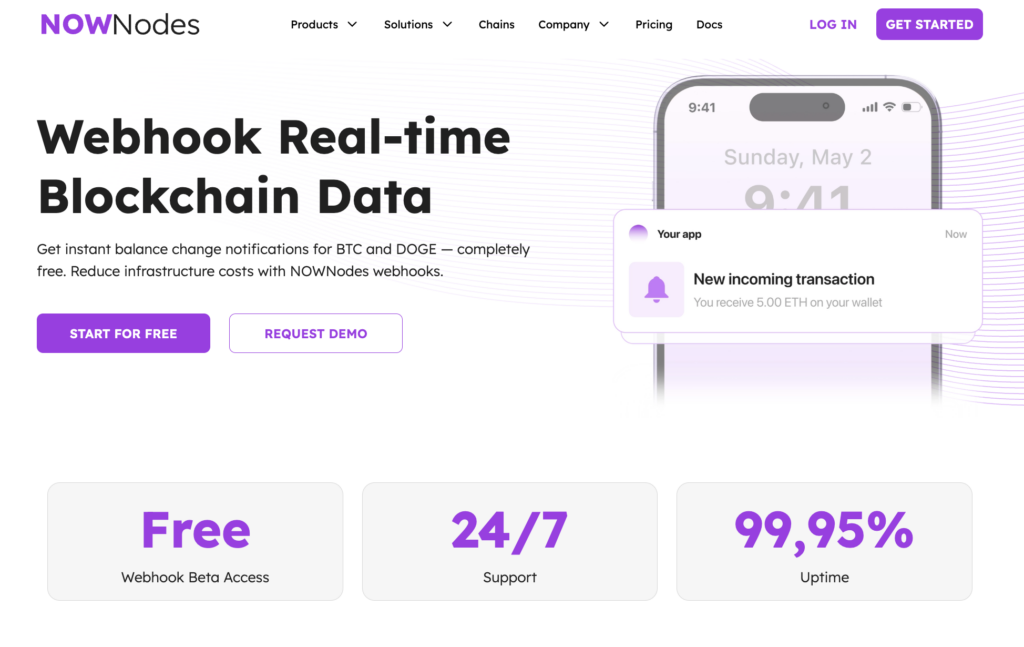
To understand webhooks better, it helps to compare them with more familiar approaches. In a typical API setup, your app sends requests again and again to check for updates, for example checking if a wallet balance has changed. This is called polling, and while it works, it can be inefficient and slow. Webhooks remove that repetition. They act more like a messenger that only speaks when there is something important to say. Once configured, the system monitors data internally and sends an HTTP request to your server when a specific event occurs, such as a balance update.
In the context of blockchain infrastructure, this becomes especially valuable. Instead of building logic that constantly queries a node, you can rely on a webhook to notify your backend the moment something changes. According to the internal documentation, webhooks are one of three main ways to receive blockchain updates, alongside WebSocket connections and blockchain notifications . The key difference is that webhooks do not require a constant connection. They operate independently and only send data when needed.
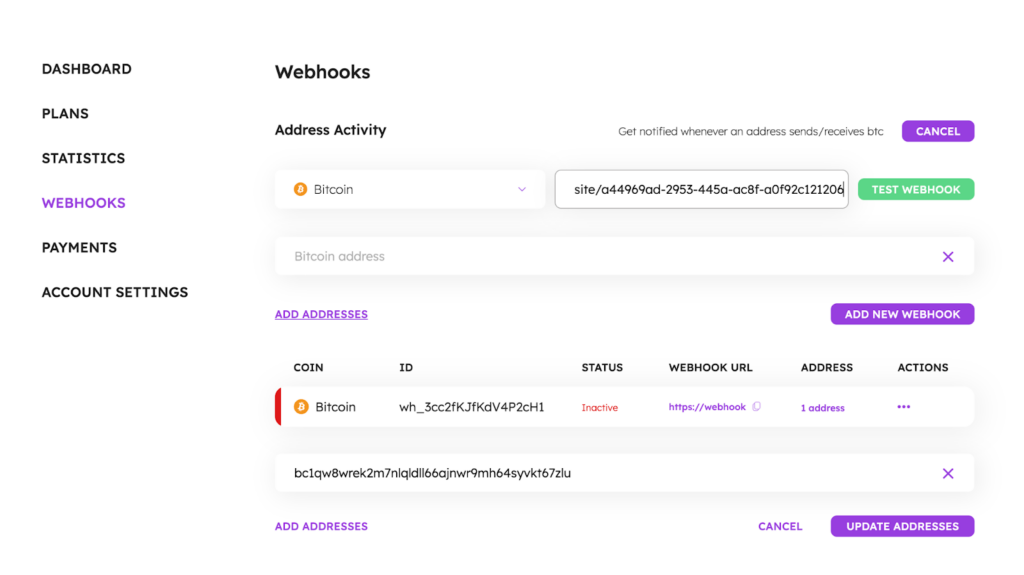
At NOWNodes, the webhook feature is designed to track changes in address balances. The setup process is quite straightforward and happens through the user dashboard.
How to use webhooks
- First, you select the blockchain network and specify the address you want to monitor.
- After that, you need to add the tracked addresses to the dashboard, and then click add webhook. A webhook will be created that will track addresses in the blockchain database, and it will have an id.
- When the webhook is configured for a specific network, it scans the blockchain database, and in the event of a balance update, it will send an Http request until it receives a 200 response, that is, a notification that the message has been delivered.
In practice, webhooks are ideal for developers who want reliability without complexity. If your use case is to track wallet balances and react to changes, for example updating a user interface or triggering a backend process, webhooks are often the cleanest solution. You set them once and let them run in the background, knowing that the system will notify you when something actually happens.